
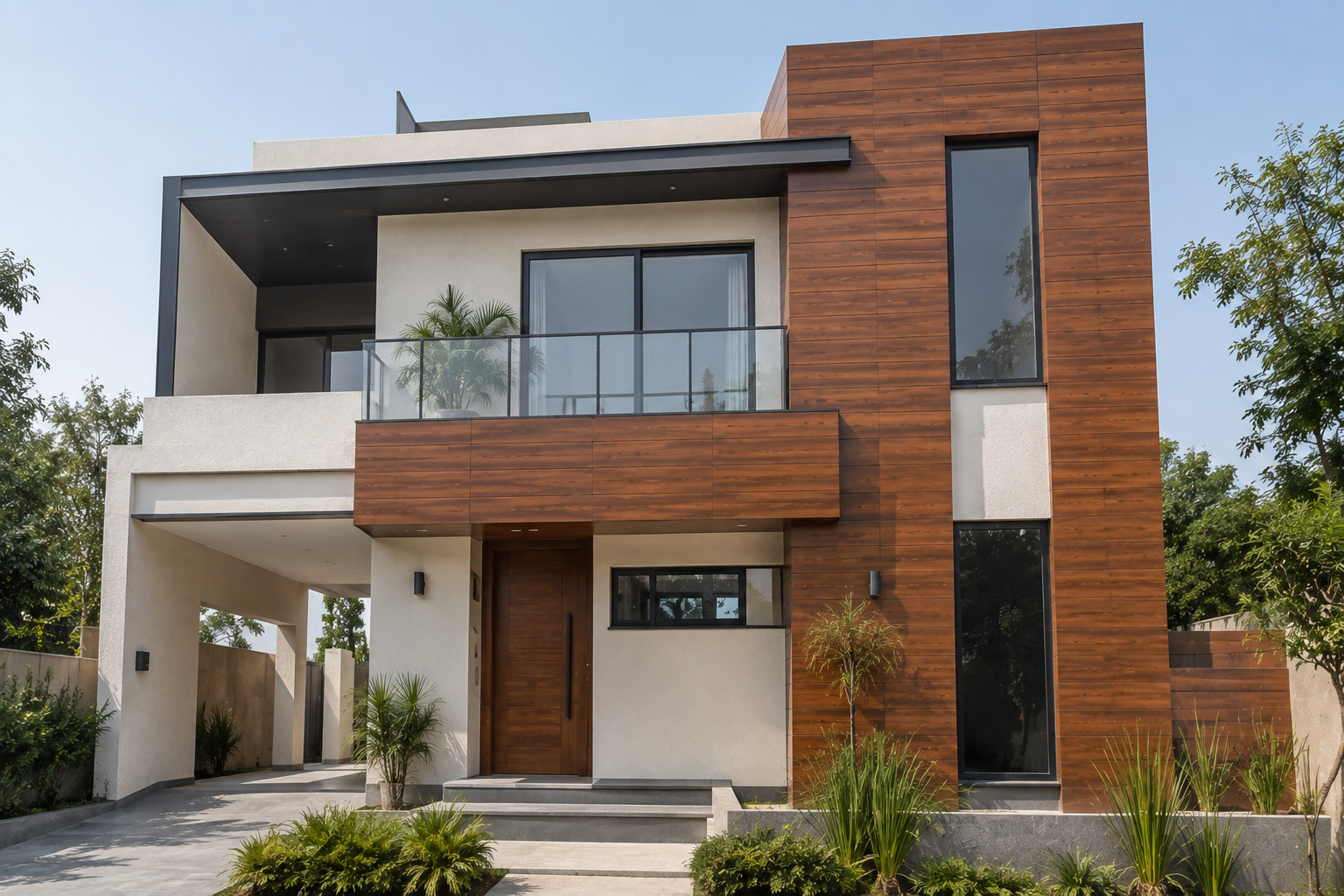
Textured surfaces have overtaken smooth and gloss as the leading finish preference in decorative laminate, and on exterior cladding the shift is even more pronounced. The reason is partly aesthetic and substantially practical.
What Texture Actually Does
Surface texture is created by the press plate during manufacture. A textured plate transfers its pattern into the curing resin, so the texture is integral to the panel rather than applied afterwards. It cannot wear off in the way a surface treatment could.
Textures range from fine matte through wood-grain registration to deep stone-effect patterning.
Why Textured Finishes Won
1. Realism
This is the main driver. A wood-grain print on a smooth surface reads as a photograph of wood. The same print with texture registered to the grain reads as wood. The difference at three metres is substantial, and it is the single biggest factor in whether a wood-look facade convinces.
2. Light behaviour
Smooth and gloss surfaces reflect specularly, producing glare and mirror-like hotspots that flatten a facade’s form. Textured surfaces scatter light, so shadow and modelling read properly. On a large elevation in strong Indian sunlight this matters considerably.
3. Mark concealment
Fingerprints, minor scuffs, dust films and water spotting all show far less on textured surfaces. At ground level and on gates where hands make contact daily, this is a maintenance advantage rather than an aesthetic one.
4. Contemporary design language
Matte and textured surfaces align with current architectural preference. Gloss reads as dated on exteriors.
Where Smooth Still Performs Better
Being fair to the alternative:
- Solid-colour minimalism. A pure flat plane in a single colour can be the design intent. Texture softens that intent.
- Ease of cleaning. Smooth surfaces wipe down faster. Deep textures hold more dust in the grain and need slightly more effort.
- Metallic and high-reflectance effects. Where the design calls for reflectivity, texture works against it.
- Very fine detail printing. Extremely fine patterns can be muddied by heavy texture.
Matching Texture to Application
- Wood-look facades: textured, registered to grain — essential, not optional
- Stone-look facades: textured — flat stone prints look artificial
- Gates and ground-level contact surfaces: textured, for mark concealment
- Solid-colour minimalist facades: fine matte or smooth, depending on intent
- Institutional buildings requiring frequent cleaning: fine matte, balancing concealment against cleanability
- Soffits and ceilings: either; texture matters less where the surface is not touched and light is indirect
Maintenance Difference
Deep textures retain slightly more dust in the surface pattern and benefit from a soft brush rather than a cloth alone. The difference is marginal — both finishes clean with water and mild detergent — but on a heavily textured stone-effect surface in a dusty location, plan for brush cleaning rather than wiping.
Neither finish should be cleaned with abrasives, which permanently dull the surface.
Frequently Asked Questions
Is textured HPL more expensive than smooth?
Pricing varies by manufacturer. Some price texture at a premium, others treat it as a standard option across the range.
Does texture wear off over time?
No. Texture is formed during pressing and is integral to the cured panel, not a surface treatment.
Is textured HPL harder to clean?
Marginally. Deep textures hold more dust and benefit from a soft brush rather than a cloth. Both clean with water and mild detergent.
Which texture suits wood-look finishes?
A texture registered to the printed grain. Wood-look on a flat surface reads noticeably less convincingly.
Comparing finishes? Contact HPLMaker for textured samples across the wood, stone and solid ranges.